
Your blog post
Blog post description.
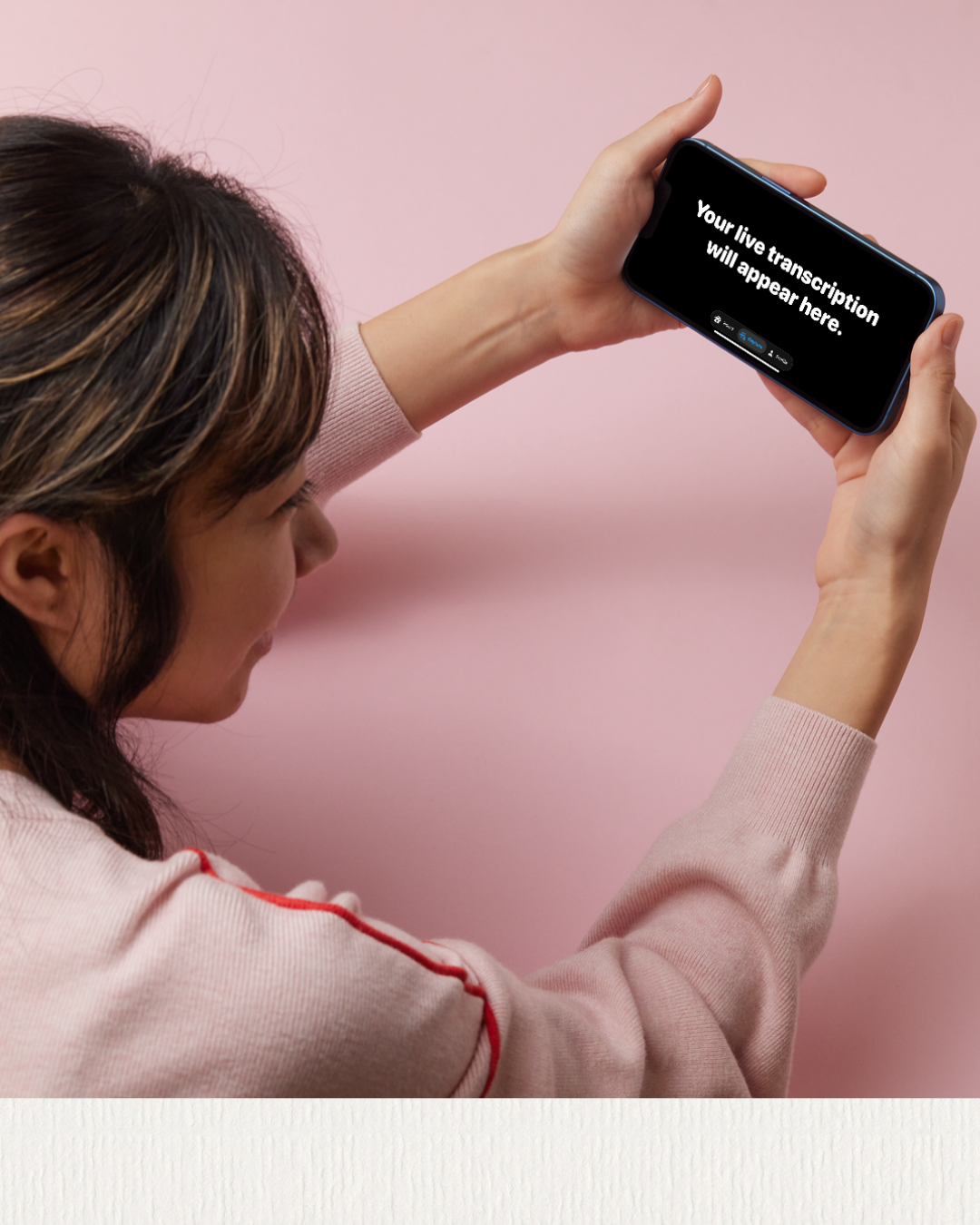
"5 Situations where live captions reduce overwhelm"
And Why Coloured Subtitles Need To Be Normalised
People often think deafness is just about not hearing sound.
It isn’t.
It’s about exhaustion.
It’s the constant concentration. The pretending you understood. The smiling and nodding because asking someone to repeat themselves for the third time feels embarrassing. It’s leaving social situations mentally drained because your brain has spent hours trying to piece together fragments of conversations like a puzzle.
For me, live captions aren’t just “helpful technology”.
They reduce overwhelm.
They reduce the invisible effort that deaf and hard-of-hearing people carry every single day.
And honestly? Coloured subtitles should have been normalised years ago.
Because accessibility should never feel clinical, robotic or one-size-fits-all.
1. Restaurants And Cafés
Restaurants are one of the most overwhelming places when you’re deaf.
Music blasting. Coffee machines steaming. Plates clattering. Multiple conversations bouncing around the room.
People think hearing aids magically fix this. They don’t.
Most of the time, all the background noise blends together into one exhausting wall of sound. You spend the entire meal trying to work out who said what while also trying to keep up socially.
Live captions help take some of that pressure away.
Instead of panicking that I missed the joke, I can glance at the subtitles and stay part of the conversation naturally.
And coloured subtitles matter here more than people realise.
Different colours help separate voices visually. My brain doesn’t have to fight as hard to work out who’s speaking. It reduces confusion instantly.
Accessibility isn’t just about “having captions”.
It’s about making captions easier to process.
2. Train Stations And Airports
Airports are stressful enough without being deaf.
Announcements echo around huge spaces with distorted speakers and unfamiliar accents. Everyone else reacts instantly while you stand there trying to work out whether your gate changed, your train is delayed or your platform has altered.
That uncertainty creates anxiety constantly.
You feel behind before you’ve even boarded.
Live captions can change that experience completely.
Instead of relying on catching muffled announcements, information becomes visual, calm and clear.
And this is exactly why accessibility tools should feel modern and personal — not like outdated medical equipment hidden in the corner.
I want subtitles that feel designed for real life.
I want colours that are calming to look at.
I want text I can process quickly without visual overload.
That shouldn’t be considered “extra”. That should be standard.
3. Meetings And Group Conversations
Group conversations are exhausting because everyone talks over each other.
Someone speaks while another person laughs. One person turns away halfway through a sentence. Another mumbles while looking at their laptop.
Within seconds, you’re lost.
The hardest part is that nobody notices.
People only see the moments you ask them to repeat themselves. They don’t see the constant mental work happening underneath.
Live captions reduce the pressure to lip-read every second of a conversation.
And coloured subtitles can genuinely help identify different speakers faster — especially in busy environments.
Imagine if subtitles worked more like modern design:
calmer colours
clearer separation
less visual chaos
more personalised focus
Why are we still treating subtitles like an afterthought?
4. Medical Appointments
Medical appointments can be one of the most vulnerable experiences as a deaf person.
You’re trying to absorb important information while also concentrating intensely on hearing correctly.
One missed sentence can matter.
And when people wear masks, look down at notes or speak quickly, it becomes even harder.
There’s also a deeper emotional side to this.
You don’t want to feel difficult.
You don’t want to constantly interrupt.
You don’t want your health appointment to become about communication struggles.
Live captions help create independence.
Not perfection. Not flawless communication.
Just less overwhelm.
Less fear of missing something important.
Less exhaustion afterwards.
5. Everyday Conversations At Home
People assume home is easier.
Sometimes it’s actually harder.
Family conversations move quickly because people are comfortable. They shout from other rooms. They talk while walking away. They speak while multitasking.
You can end up feeling isolated inside your own home without anyone intentionally excluding you.
That’s why accessibility technology matters emotionally, not just practically.
Captions help me stay connected to ordinary moments:
silly conversations
quick comments
shared jokes
everyday life
Those moments matter.
Why Coloured Subtitles Need To Be Normalised
This is the part people rarely talk about.
Subtitles shouldn’t feel cold.
Accessibility shouldn’t feel like a compromise.
Different people process information differently. Some people focus better with softer colours. Others find white subtitles visually overwhelming. Some people benefit from stronger contrast or different tones separating speakers.
Coloured subtitles are not “just aesthetic”.
They improve focus.
They reduce visual fatigue.
They help organise conversations visually in noisy environments.
Most importantly:
they make accessibility feel human.
We personalise everything else in life:
phones
wallpapers
lighting
fonts
dark mode
So why are subtitles still treated as if everyone processes communication the same way?
Accessibility should adapt to people — not force people to adapt to accessibility.
And maybe that’s the bigger conversation.
Live captions aren’t only about deafness.
They’re about reducing overwhelm in a world that has become louder, faster and harder to process for so many people.